


Reliable Off-Grid Power for Remote Canada with HNP Power
- HNP Power

- Aug 3, 2025
- 4 min read

In many parts of rural and remote Canada, access to electricity remains a costly and fragile lifeline. Over 6.3 million Canadians live in areas with fewer than 1,000 inhabitants, many of whom are located far from the main electricity grid. For these communities, diesel-powered generators are often the only option—expensive to run, environmentally harmful, and heavily reliant on fuel transported over long distances. These constraints limit community growth, strain local budgets, and increase dependence on outside sources for basic energy needs.
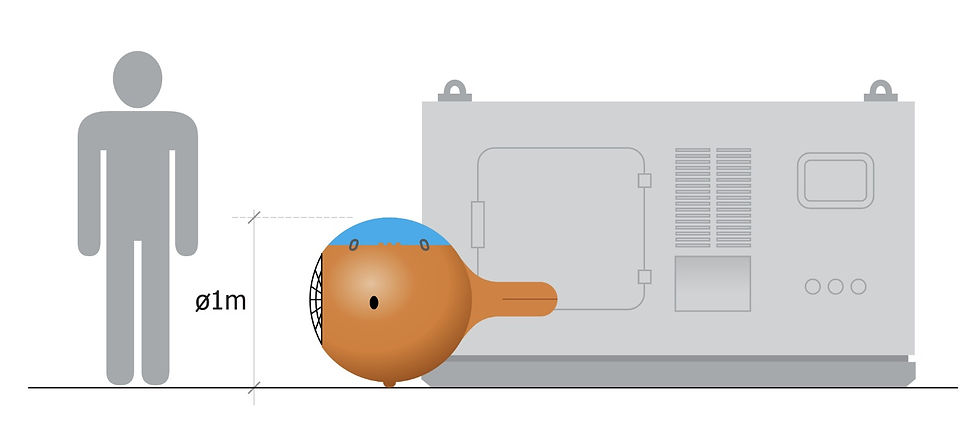
HNP Power introduces a game-changing solution: a mini-hydropower turbine that operates on the kinetic energy of natural water flow. Designed specifically for off-grid and low-infrastructure areas, this turbine eliminates the need for fuel, professional installation, or permanent structural changes. It works even in low-velocity rivers, creeks, and streams, making it ideal for Canada’s vast northern and rural regions. With simple deployment, autonomous operation, and high adaptability, HNP Power aims to transform energy access across remote communities.
Harnessing Nature to Solve Real Energy Challenges
The HNP Power turbine brings together two proven technologies to deliver a reliable energy source: the hydraulic ram pump and a Kaplan-style low-flow turbine. The hydraulic ram pump uses the momentum of flowing water to create a water hammer effect, generating enough pressure to power the system—without requiring electricity or external input. This built-in pressure is directed into the Kaplan radial-axial rotary-blade turbine, which efficiently converts the water flow into usable electricity, even at low velocities.
This system offers multiple advantages over diesel-based alternatives. It functions independently of seasonal water level changes, making it viable year-round, even in northern climates where freezing temperatures are a major concern. It also requires no permanent infrastructure—meaning no dams, concrete foundations, or professional construction crews. By harnessing the power of naturally flowing water, HNP Power provides a self-sustaining energy option that can be deployed anywhere there is a water source with a minimal drop of 1.5 meters.
The device is compact, portable, and easy to reposition. Its automatic positioning system determines the most efficient location in a river using real-time tension sensing and anchor control. Once deployed, the system requires minimal to no maintenance, freeing communities from ongoing technical dependency. It’s a reliable, long-term solution that respects the surrounding environment while solving energy access problems.
Remote Community Applications and Deployment Scenarios
Canada’s remote communities face complex logistical and economic challenges when it comes to powering homes, schools, clinics, and local businesses. These regions often rely on diesel generators that consume vast amounts of fuel transported by plane, barge, or truck, making energy one of their most significant recurring costs. With HNP Power, that equation changes.
The mini-hydropower turbine can be installed in a variety of natural settings. Along a wide river, it anchors to the bottom or nearby structures with no need for construction. In a narrow creek, a simple pipe system collects and redirects water to the turbine’s inlet, where only a modest drop is needed to activate its internal hydraulic system. Once in place, the unit generates between 0.6 to 1.9 kilowatts per hour—enough to cover key household needs such as lighting, refrigeration, and digital connectivity.
Beyond individual homes, communities can install several turbines in parallel to form a localized grid or “battery” of devices. This modularity enables small villages, remote work camps, and indigenous settlements to scale their power generation based on local demand. By reducing reliance on fossil fuels and enabling local control over energy resources, HNP Power empowers communities to reinvest in health, education, and infrastructure—unlocking new opportunities for social and economic development.
The Economic and Social Impact of Energy Independence
Access to consistent, low-cost power has transformative effects on remote communities. Diesel dependence not only strains local budgets but also limits economic potential. Every gallon of diesel fuel must be flown in or delivered via winter roads, often at high risk and cost. This dependency affects everything from education and healthcare to business development and basic quality of life. In contrast, the HNP Power turbine offers a fixed-cost, low-maintenance solution that runs indefinitely with access to flowing water.
With energy independence, communities can redirect resources typically spent on fuel toward more productive investments: improving schools, upgrading clinics, launching local businesses, and strengthening transportation infrastructure. In indigenous and non-indigenous settlements alike, this shift allows for the development of skilled labor, increased self-reliance, and local job creation—especially in the installation and maintenance of decentralized energy systems like HNP Power.
The social impact goes further. By replacing noisy and polluting diesel generators with quiet, emission-free hydropower, community life becomes healthier and more livable. There are fewer fuel spills, less air pollution, and lower health risks, especially for children and the elderly. Reliable power also ensures that heating and refrigeration systems stay on in winter—critical in Canada’s harsh northern environments. HNP Power is more than a clean energy tool; it’s a catalyst for long-term social and economic progress.
A New Path to Sustainable Power for Rural Canada
Canada’s energy landscape is rapidly evolving, and rural communities should not be left behind. HNP Power presents a smart, localized alternative to diesel generation that respects the environment, saves money, and empowers residents. Its mini-hydropower turbine is not just a product—it’s a solution designed for real-world conditions, delivering energy where traditional infrastructure cannot.
With zero emissions, easy deployment, and scalability for both households and villages, this innovation bridges the gap between sustainability and accessibility. It works in small rivers, cold climates, and low-flow conditions—unlocking renewable power where it was once thought impossible. For off-grid communities across Canada, HNP Power marks a new chapter in clean, self-sufficient living.


Comments